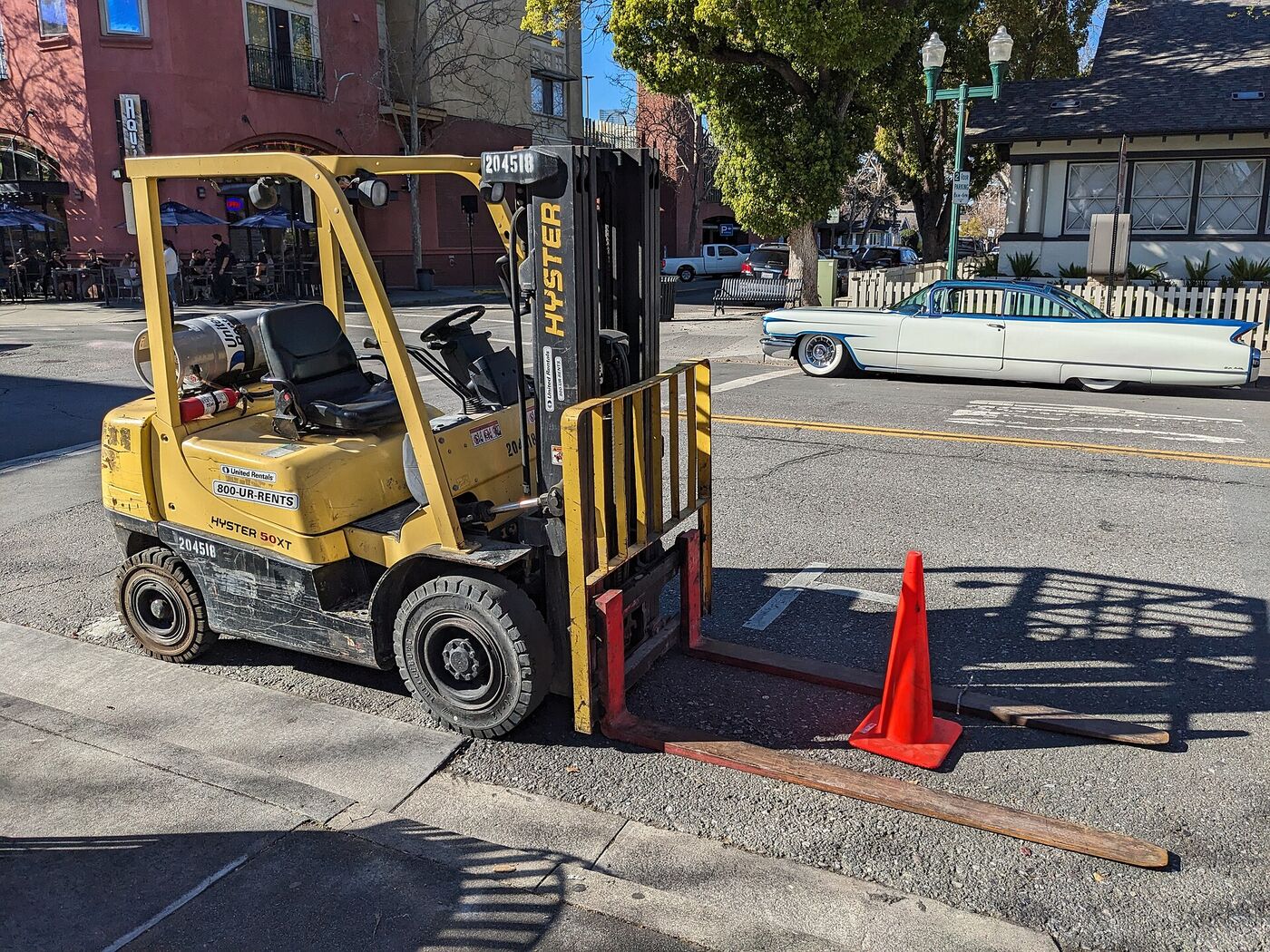

The walk-around every operator should do at the start of a shift, what to look for at each point, and what to do when something is wrong. Printable checklist included.
Why the pre-use check matters
Under PUWER, work equipment must be maintained in an efficient state, in efficient working order and in good repair. The pre-use check is the operator's part of that duty. It takes five minutes, it catches the faults that develop between services, and it is the first thing an investigator asks about after an accident. If a truck with a known fault is involved in an injury, "we didn't check it" is not a defence for the operator or the employer.
The check is not the same as the thorough examination required under LOLER, which a competent person must carry out at least every twelve months. It is a quick visual and functional inspection done by the operator before every shift, or every time a different operator takes over.
The walk-around
Work around the truck in the same order every time so nothing is missed. The route below is the one we teach.
Checklist
Print this page and keep it by the charging point or key cabinet. Tick each item, record the truck number, date and your name, and hand it in.
Before starting the engine
- Forks: no cracks, bends or excessive heel wear. Fork tips level with each other. Locking pins in place.
- Carriage and load backrest secure and undamaged.
- Mast: chains equally tensioned, lubricated, no damaged or stretched links. Rollers and hoses undamaged.
- Hydraulics: no leaks around the mast, cylinders, hoses or under the truck.
- Tyres: correct pressure (pneumatic) or no chunking and cuts (solid). Wheel nuts present and tight.
- Fuel, oil, coolant and hydraulic fluid levels. Battery secure, connectors clean, electrolyte level correct (lead-acid).
- LPG cylinder secured, valve closed correctly, no smell of gas.
- Overhead guard undamaged. Seat secure. Seat belt present and working.
- Mirrors, lights, beacon and reversing alarm undamaged.
- Capacity plate and data label present and legible.
- No obvious damage to the body or counterweight that was not there yesterday.
After starting the engine
- Warning lights go out. Gauges read normally.
- Horn works. Lights, beacon and reversing alarm work.
- Steering: full lock both ways, no excessive play.
- Service brake stops the truck smoothly. Parking brake holds on a slope.
- Lift, lower, tilt and any attachment functions operate smoothly through their full range with no juddering or drift.
- Mast does not creep down or tilt forward when loaded and left for a minute.
- Battery charge or fuel level sufficient for the shift.
What to do if something is wrong
Employers need a system for this: a defect book or app, a person responsible for acting on reports, and a way of stopping a tagged truck being quietly put back into service by the next shift. Operators need to know that reporting a fault will not be held against them.
Common faults the check catches
- Fork wear. Forks are scrapped when the heel has worn by 10 per cent of its original thickness, because capacity drops by about 20 per cent at that point. A fork wear calliper makes this a ten-second check.
- Chain stretch. Chains that have elongated by 3 per cent are due for replacement. Uneven tension between the two chains tilts the carriage and stresses one side.
- Hydraulic leaks. A weeping hose today is a burst hose under load next month. See our article on hydraulic hoses.
- Tyre damage. Chunking on solid tyres and low pressure on pneumatics both reduce stability, especially when cornering with a raised load.
- Missing capacity plate. Without it the operator cannot know what the truck can safely lift. The truck should not be used until it is replaced.
Key points
- Check the truck before every shift and whenever a different operator takes over.
- Follow the same walk-around route every time so nothing is missed.
- Never use a truck with a safety-critical defect. Remove the key and tag it out.
- The pre-use check does not replace the LOLER thorough examination, which is at least annual.
- Keep the completed checklists. They are evidence that the system works.
Sources and further reading
- HSE L117, paragraphs on pre-use checks and maintenance
- HSE, Lifting Operations and Lifting Equipment Regulations 1998, Regulation 9 (thorough examination)
- British Industrial Truck Association (BITA), guidance on fork arm inspection