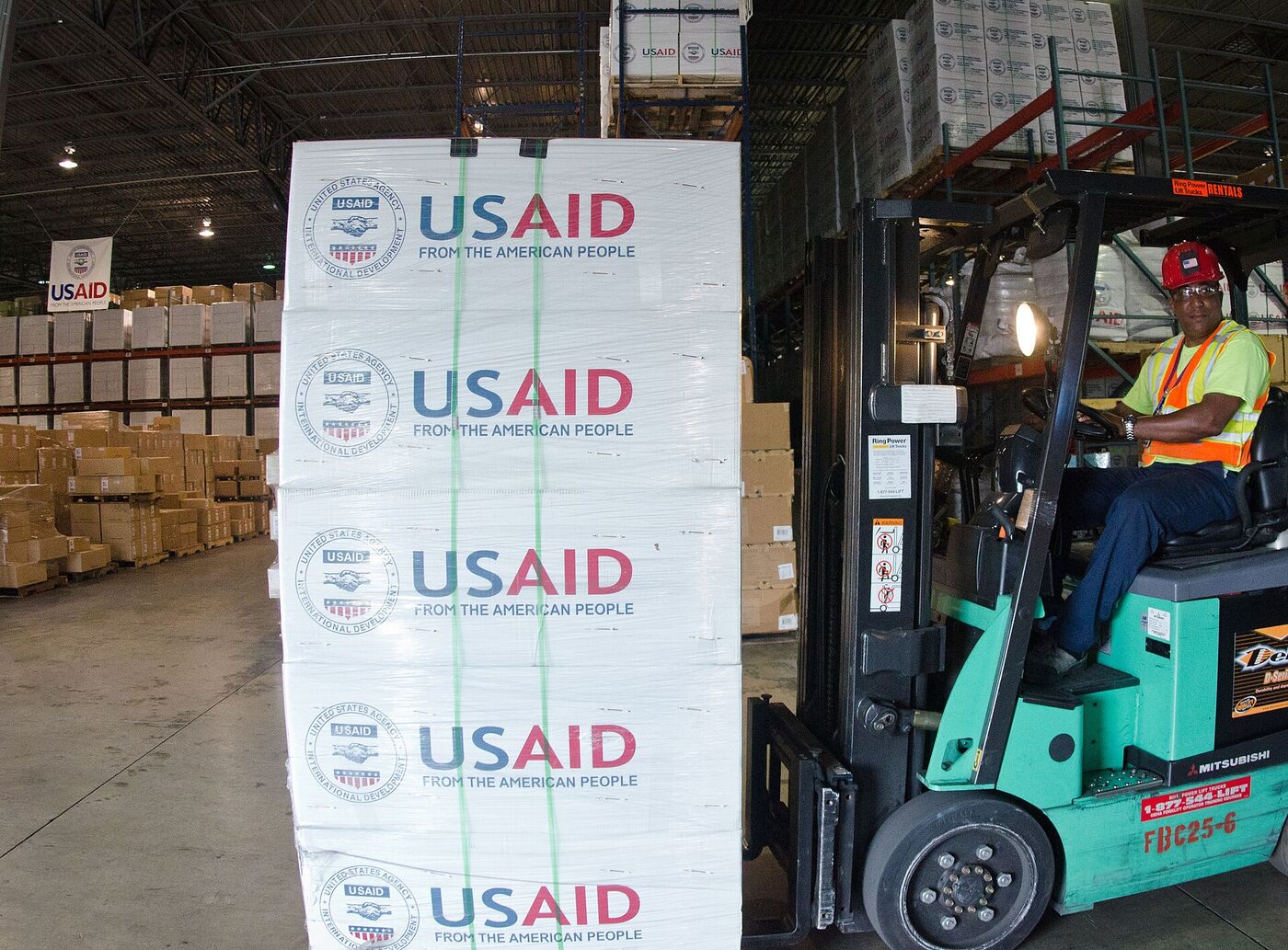
Being struck by a forklift is the most common way people are killed by them, and most of the victims are pedestrians. How to separate people from trucks, and what to do where you cannot.
The problem
Being struck by a moving vehicle is one of the biggest killers in UK workplaces, and in warehouses and yards the vehicle is very often a forklift. The people hurt are usually not the operators. They are colleagues walking through the loading bay, delivery drivers standing beside their trailer, visitors following the wrong route. A three-tonne truck at walking pace still delivers enough force to crush a person against racking or a vehicle.
The Workplace (Health, Safety and Welfare) Regulations 1992 require traffic routes to be organised so that pedestrians and vehicles can circulate safely. The HSE's approach is a simple hierarchy: eliminate the need for people and trucks to share space; where you cannot, separate them physically; where you cannot do that, control the interaction with rules, signage and supervision.
Step one: keep people out of truck areas
- Route pedestrian access to offices, toilets and canteens so it never crosses a truck aisle. Sometimes that means a new door.
- Give delivery drivers a marked safe area to wait in, away from the vehicle being loaded, and make it a site rule that they use it.
- Schedule tasks that need people in the aisles, such as stock counts or cleaning, for times when trucks are not running, or close the aisle while they happen.
- Keep visitors and contractors out of operational areas unless escorted.
Step two: physical separation
- Barriers, not paint, where routes must run side by side. A painted line stops nothing.
- Separate doors for people and trucks. Where a single door is unavoidable, a pedestrian gate beside the truck door with a vision panel.
- Kerbs, bollards and rack-end protectors at the points where people step into an aisle.
- Marked crossing points with good sight lines, mirrors on blind corners, and a rule that trucks stop at every crossing.
- One-way systems for trucks reduce the number of places where trucks meet each other and reverse.
Step three: rules everyone follows
These are the site rules we recommend as a minimum. They need to apply to everyone, including managers and visitors, or they will not be followed by anyone.
- Pedestrians stay on marked walkways. If there is no walkway, there is no pedestrian access.
- Nobody walks or stands under raised forks or a raised load, ever.
- Nobody approaches a truck until the operator has seen them, stopped, and signalled that it is safe.
- Operators sound the horn at corners, doorways and crossings, and slow to walking pace wherever pedestrians may be present.
- High-visibility clothing for everyone in operational areas. It helps, but it does not make anyone safe on its own.
- No mobile phones or headphones on walkways in truck areas.
- Lorry drivers stay in the cab or in the designated safe area while their vehicle is loaded.
Speed
There is no legal speed limit for forklifts, so the site sets one. Ten miles per hour is common in open yards; five in warehouses; walking pace anywhere a pedestrian could appear. Many trucks can be governed electronically, and some sites use zone-based speed control that slows trucks automatically indoors. Speed limits need enforcing: an operator who is never spoken to about speed assumes it does not matter.
Technology that helps
Blue and red spot lights projected ahead of and beside the truck, pedestrian detection systems, proximity tags and camera systems all reduce risk. None of them replace separation and rules. Treat them as a further layer, and make sure operators understand what each system does and does not detect.
Supervision and culture
Most sites have rules. The ones with fewer accidents are the ones where supervisors are visible on the floor, where near misses get reported and discussed rather than laughed off, and where an operator who stops for a pedestrian is not told to hurry up. Include pedestrian safety in every induction, refresh it in toolbox talks, and review the layout whenever the process changes.
Key points
- Most people killed by forklifts are pedestrians, not operators.
- Follow the hierarchy: eliminate shared space, then separate physically, then control with rules.
- Paint is not a barrier. Use physical protection where people and trucks must be close.
- Set and enforce a site speed limit. Walking pace wherever pedestrians could appear.
- Rules only work if they apply to managers and visitors too.
Sources and further reading
- HSE, Workplace transport safety: an employers' guide (HSG136)
- HSE, Workplace (Health, Safety and Welfare) Regulations 1992, Regulation 17 (traffic routes)
- HSE L117