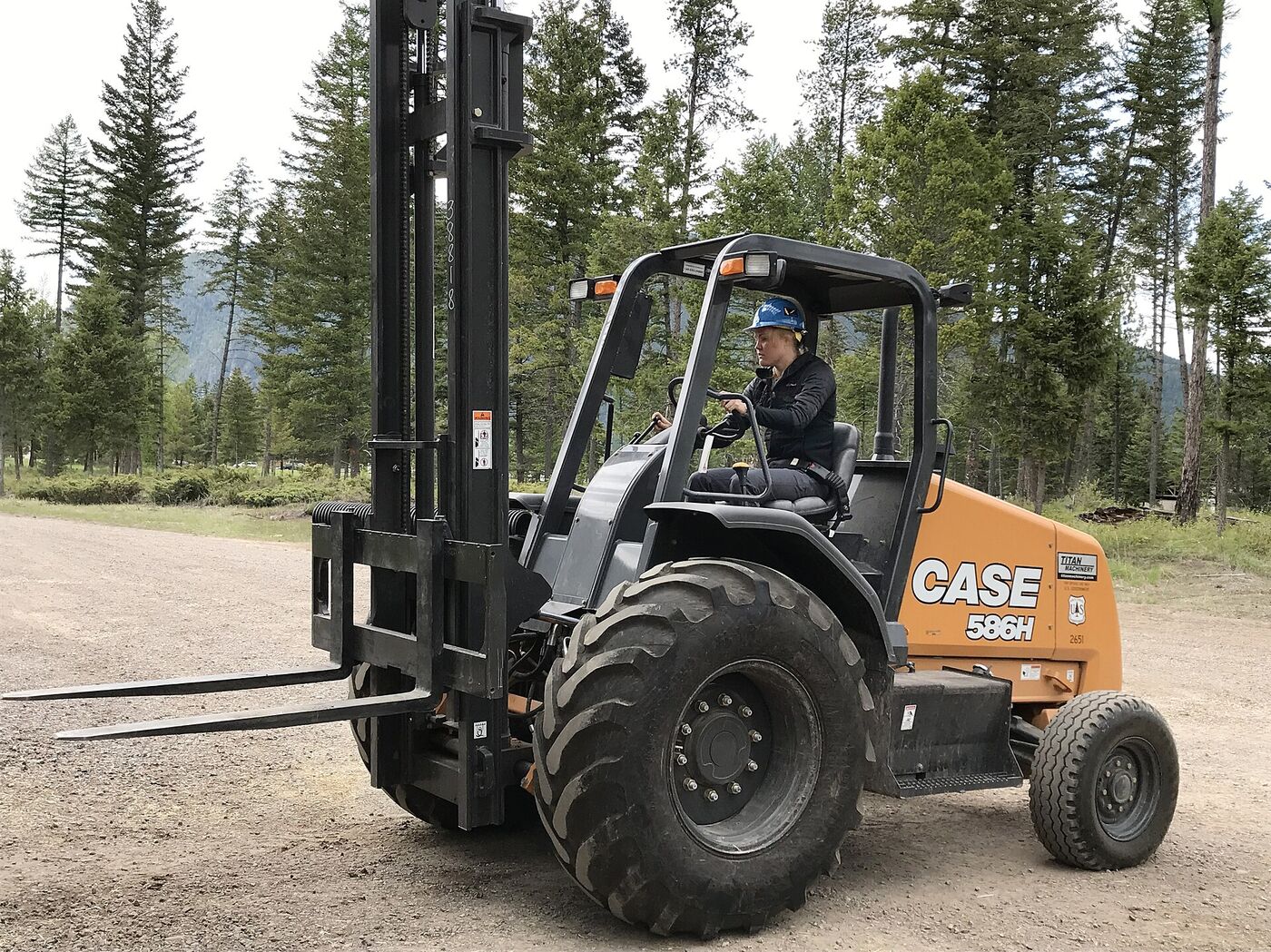
Who needs training, what the law actually says, how a course is structured, what the test involves and how long a certificate lasts. Everything an operator or employer needs before booking.
Is there such a thing as a forklift licence?
No. There is no government-issued forklift licence in the UK, and no central register of operators. What exists instead is a legal duty on employers to make sure anyone who operates a lift truck at work has received adequate training. That duty comes from the Provision and Use of Work Equipment Regulations 1998 (PUWER) and is spelled out in the Health and Safety Executive's Approved Code of Practice L117, Rider-operated lift trucks: operator training and safe use.
When people talk about a "forklift licence" they usually mean the certificate of basic training issued at the end of a course. That certificate is what an employer, an insurer or an HSE inspector will ask to see. It records the truck type, the date, the training provider and, where the provider is accredited, the accrediting body.
The three stages of training
L117 splits operator training into three stages. A certificate only covers the first, and an operator is not fully trained until all three are complete.
- Basic training. The skills and knowledge needed to operate a particular truck type safely: how it works, how it can tip over, pre-use checks, manoeuvring, stacking and de-stacking, and the rules for working around pedestrians. This is the part delivered by a training provider and assessed by theory and practical tests.
- Specific job training. Knowledge of the actual truck the operator will use, its attachments, the loads they will handle and the site layout, including traffic routes, gradients, racking and any special hazards such as cold stores or hazardous substances.
- Familiarisation. Supervised time on the job, applying what has been learned in the real working environment under close supervision until the operator is confident and the supervisor is satisfied.
Stages two and three are the employer's responsibility, even when an external provider delivers stage one. When we train on your site we build much of the specific job training into the course, but familiarisation always happens afterwards.
Who needs to be trained
- Anyone who drives a lift truck at work, however occasionally. "Just moving it out of the way" counts.
- Supervisors and managers who oversee lift truck operations. They do not need to be able to drive, but they need enough knowledge to recognise unsafe practice and to plan work safely.
- Agency and temporary workers, who must be trained and authorised to the same standard as permanent staff.
- Operators must be at least 16. Under-18s need extra supervision, and operators at ports and docks must be 18 or over.
Novice, conversion or refresher?
| Course | Who it is for | Typical length |
|---|---|---|
| Novice | No previous lift truck experience | 3 to 5 days for one truck type, depending on group size |
| Experienced (no certificate) | Has driven before but never been formally tested | 2 to 3 days |
| Conversion | Certified on one truck type, moving to another | 1 to 2 days |
| Refresher | Certified operators due a refresher, returning after a break, or after an incident | 1 day |
Group size matters. Practical training is one-to-one time on the truck, so a group of three novices needs more days than a single candidate. Most providers cap groups at three per instructor per truck.
What a course covers
- The law, the operator's responsibilities and the employer's responsibilities
- How the truck works: controls, hydraulics, mast, steering, braking and, for electric trucks, battery care
- Stability: the stability triangle, load centres, the capacity plate and what causes tip-overs
- Pre-use inspection and defect reporting
- Safe driving: starting, stopping, steering, reversing, ramps and gradients, wet and uneven surfaces
- Handling loads: picking up, travelling, stacking and de-stacking at height, working in racking
- Loading and unloading road vehicles
- Pedestrians, site rules, speed, horn use and parking
The test
Assessment has three parts, and candidates must pass all of them.
- Theory test. Usually a written multiple-choice and short-answer paper. Candidates who struggle with reading can be assessed verbally.
- Pre-use inspection. The candidate carries out a full walk-around check of the truck, talking the examiner through what they are looking for and identifying any faults that have been planted.
- Practical driving test. A timed course covering manoeuvring in confined spaces, stacking and de-stacking at height, travelling with a load and, where relevant, loading a vehicle. Penalty points are given for errors. Some faults, such as travelling with the forks raised or striking racking, are an automatic fail.
How long a certificate lasts
A certificate of basic training does not have a legal expiry date. L117 says operators should receive refresher training or a re-assessment at regular intervals, and the HSE's guidance suggests every three to five years as a reasonable benchmark. Many employers, insurers and accrediting bodies treat three years as the standard. Refresher training should come sooner if an operator has had an accident or near miss, has not driven for a while, is moving to a different truck or environment, or has developed bad habits. Our refresher training guide covers this in more detail.
Choosing a training provider
- Check they are accredited by a recognised body. The main ones for lift trucks are RTITB, AITT, ITSSAR, NPORS and Lantra, and most sit under the Accrediting Bodies Association for Workplace Transport (ABA).
- Ask what the certificate will say, and whether results are registered with the accrediting body so they can be verified later.
- Be cautious of one-day "novice" courses. A day is enough for a refresher, not for someone who has never driven a truck.
- Prefer training on your own site, on your own trucks. It removes the gap between basic and specific job training.
- Ask about instructor-to-candidate ratios and how much time each candidate actually spends on the truck.
Key points
- There is no forklift licence. Employers must ensure operators are adequately trained under PUWER and L117.
- Training has three stages: basic, specific job and familiarisation. A certificate only covers the first.
- Novice courses take three to five days. Refreshers take a day and are recommended every three to five years.
- The test has a theory paper, a pre-use inspection and a practical drive.
- Use an accredited provider and train on your own site where you can.
Sources and further reading
- HSE, Rider-operated lift trucks: operator training and safe use, Approved Code of Practice L117 (third edition)
- HSE, Provision and Use of Work Equipment Regulations 1998, Regulation 9 (training)
- Accrediting Bodies Association for Workplace Transport (ABA), Code of Practice for lift truck training