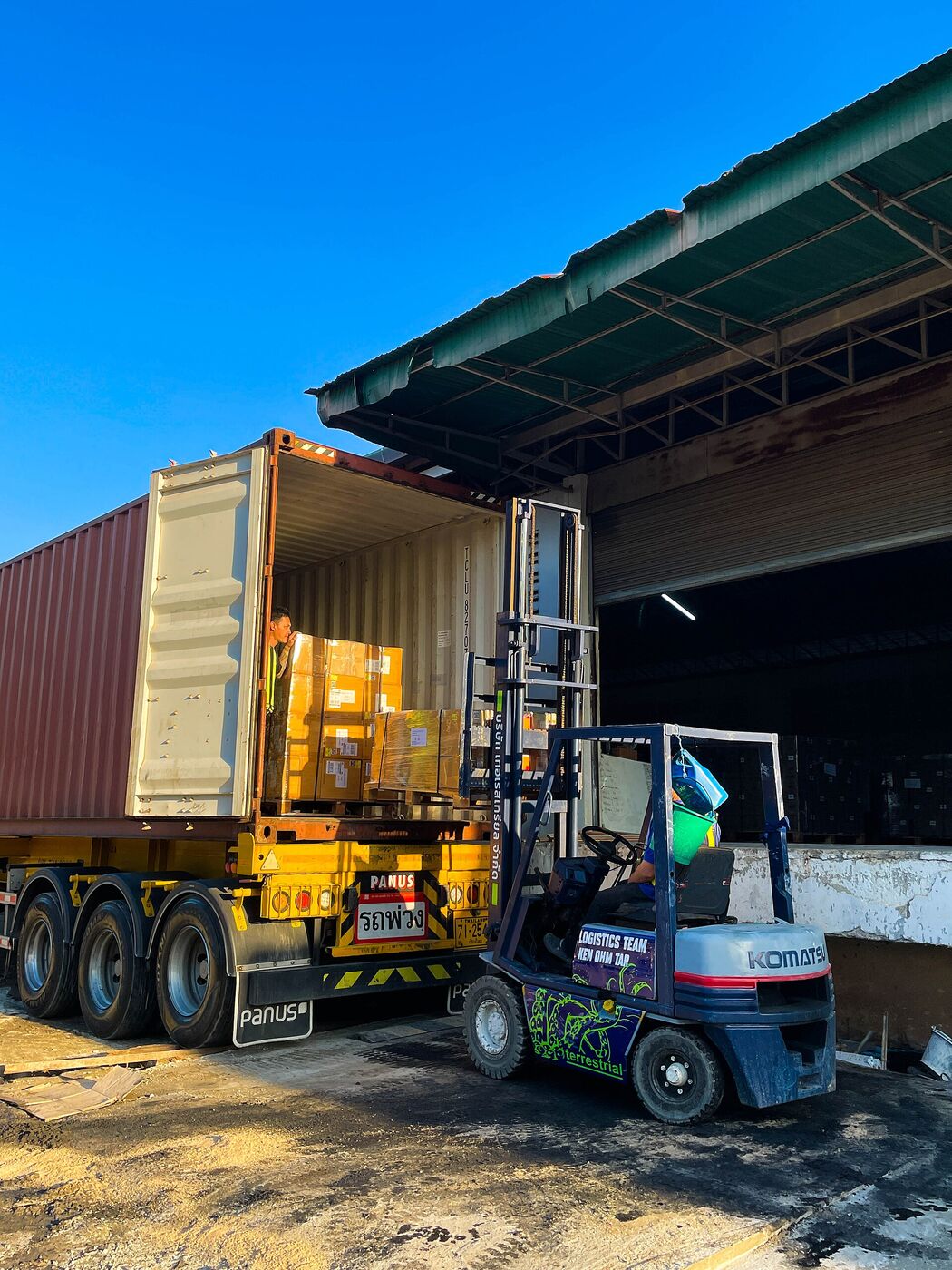

Loading bays are where forklifts, lorry drivers and pedestrians all meet. Vehicle creep, trailer tip, falls from the dock and crushing between truck and trailer are all preventable. Here is how.
Why loading bays are dangerous
Three of the incident reports on this site involve a delivery driver killed or seriously injured beside their own vehicle while it was being loaded by a forklift. The pattern repeats: the driver was somewhere the forklift operator did not expect, a load shifted or fell, and there was nowhere to go. Loading bays concentrate every workplace transport hazard into one place: vehicles reversing, trucks working at the edge of a raised dock, loads at height, and people who do not work at the site and do not know its rules.
Before loading starts
- The vehicle is on level ground, engine off, parking brake applied and, for trailers, the keys are with the person controlling the loading.
- Wheel chocks or a dock lock are in place so the vehicle cannot creep forward as the forklift drives in and out.
- Detached trailers have their landing legs down on firm ground and, where the load will be concentrated at the front, a trailer stand or tractor unit coupled to prevent tipping.
- The trailer floor has been checked for damage and can take the weight of a loaded forklift.
- The dock leveller or bridge plate is correctly positioned, secured and rated for the truck and load.
- The driver is in the designated safe area or the cab, and has confirmed they will stay there until told loading is finished.
Driving into a trailer
- Enter straight and slowly. Watch the gap between the truck and the trailer walls. Many trailers are narrower than they look from the dock.
- Check the height. The overhead guard must clear the trailer roof and any internal fittings.
- Lighting inside a curtain-sider or box trailer is usually poor. Use the truck's lights and give your eyes time to adjust.
- Keep well back from the far end and from the trailer edge on a flatbed. Reverse out in the same line you drove in.
- Never drive a forklift into a trailer that has not been secured against movement.
Curtain-siders and flatbeds
Side loading from the ground avoids the dock but brings its own problems. Loads on a flatbed sit at a height where a fall crushes anyone below. Curtains must be fully open and clipped back. The forklift works from one side only, and nobody, including the driver, stands on the far side or on the bed while the truck is placing or removing loads. Loads that have shifted in transit can fall as soon as the straps are released; release straps from the side that will not be under the load, and never from the side the forklift is working on.
Falls from the dock edge
Dock edges are typically 1.2 metres above the yard. A forklift reversing off the edge usually overturns, and the operator is trapped. Fit dock edge barriers or bollards on every unused bay, use a dock light or traffic signal system that shows red until the vehicle is secured, and mark the edge clearly. Operators should treat an open dock door with no vehicle as a hole in the floor.
Communication
Agree who is in charge of the loading operation. On most sites it is the forklift operator or the shift supervisor, not the lorry driver. That person decides when the vehicle can be moved, when the driver can return to it, and when loading is finished. A simple system of dock lights, a signed handover of keys, or a radio call is enough, but it has to be the same system every time and every driver has to be told it at the gate.
Load security
What goes on the vehicle has to stay there at 56 mph. Pallets should be stable before they are loaded, placed against the headboard or against each other with no gaps, and secured according to the Department for Transport's load securing guidance. A forklift operator who loads a badly stacked pallet because it is what came off the line shares responsibility for what happens on the motorway.
Key points
- Secure the vehicle before the forklift goes near it: brakes, chocks or dock lock, keys controlled.
- Drivers wait in the cab or a marked safe area until the person in charge says loading is finished.
- Check trailer floors, dock levellers and headroom before driving in.
- Protect every open dock edge as if it were a hole in the floor.
- One person controls the operation, using the same communication system every time.
Sources and further reading
- HSE, Workplace transport safety (HSG136), section on loading and unloading
- HSE, Safe loading and unloading of vehicles web guidance
- Department for Transport, Load securing: vehicle operator guidance