.jpg)
Slopes, soft ground, weather, poor light and public roads. Working a forklift outside brings hazards a warehouse operator never meets, and a warehouse truck is often the wrong machine for the job.
The right truck for the ground
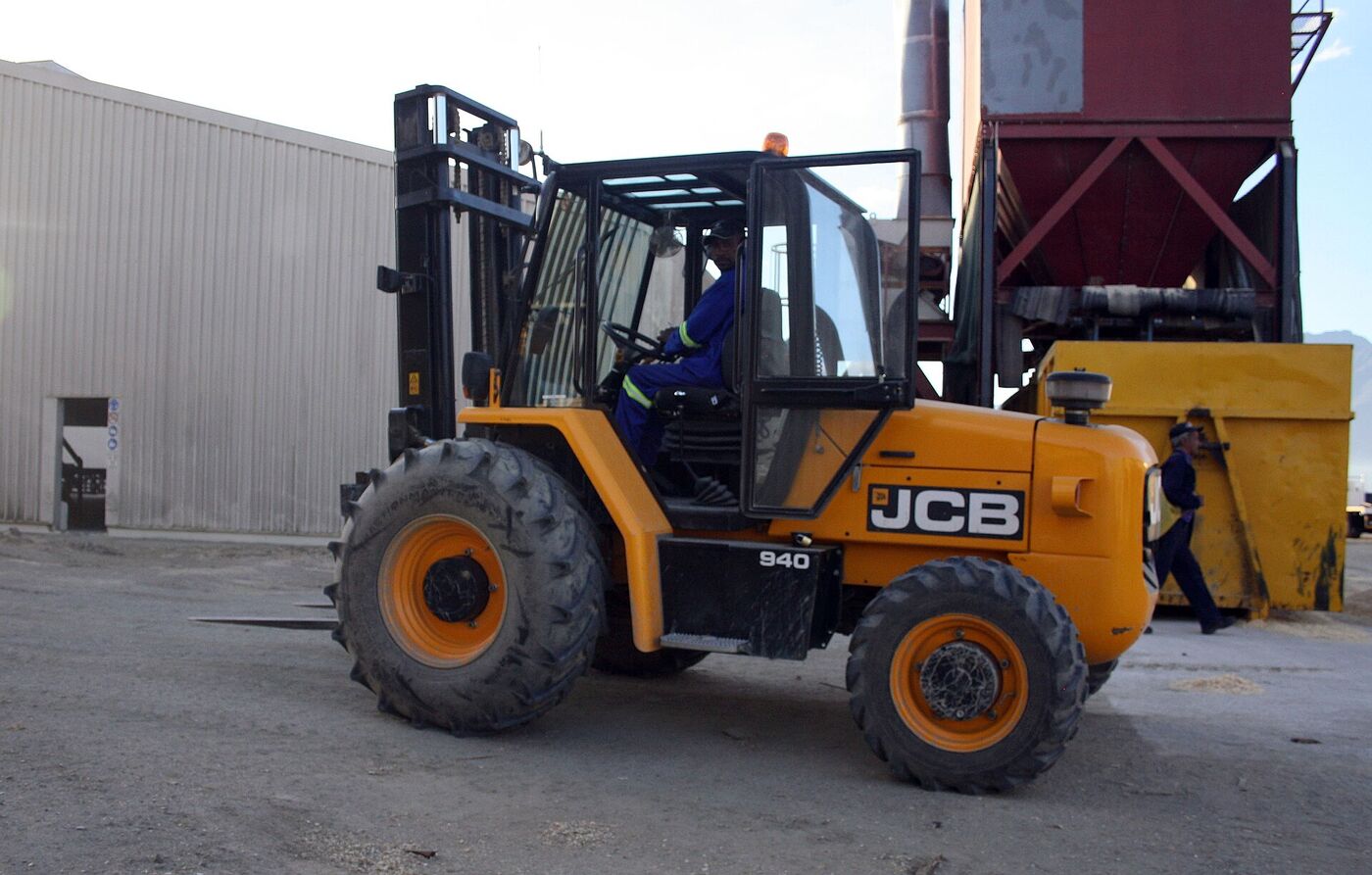
A standard counterbalance truck with solid tyres is designed for smooth concrete. Take it onto gravel, mud or a rutted yard and its ground clearance, tyre grip and stability all fall short. Rough terrain trucks have large pneumatic tyres, high ground clearance, more powerful engines and often four-wheel drive. They are the right choice for builders merchants, farms, construction sites and any yard that is not paved. Using the wrong truck outdoors is a common factor in overturns.
Slopes and gradients
- Drive straight up and straight down. Never across a slope, and never turn on one.
- Load uphill: forks pointing up the slope, whether going up or down. With a load, drive forward up the slope and reverse down it. Unloaded, do the opposite.
- Keep the load low and the mast tilted back.
- Know the truck's rated gradeability and the site's steepest gradient. If they are close, do not use that route.
- Wet, icy or muddy slopes reduce grip. A slope that is fine in summer may not be in January.
Ground conditions
Soft ground, potholes, kerbs, drain covers and loose material all cause one wheel to drop or lose grip. Walk the route before using it for the first time, report ground defects, and keep to the marked routes. Ground that has been excavated and backfilled may not take a loaded truck for weeks afterwards. Stay well back from trench edges: the safe distance is at least the depth of the trench.
Weather
- Rain reduces braking and steering grip, and water on the forks makes loads slip. Slow down and lengthen stopping distances.
- Ice and snow make slopes impassable and hide ground defects. Grit routes, fit winter tyres or chains where the manufacturer allows, and stop work if conditions are not safe. Our article on winter operation covers this in more detail.
- Wind acts on large loads like a sail. Sheet materials, empty containers and tall pallets can be pulled off the forks or tip the truck. Set a wind speed above which lifting stops.
- Heat affects operators as much as machines. Provide shade, water and rest breaks, and watch for the lapses in concentration that go with fatigue.
Light and visibility
Yards are often unlit or poorly lit, and outdoor work carries on after dark for much of the year. Trucks need working lights front and rear, a beacon, and reflective markings. Routes need lighting at junctions, crossings and loading points. Operators wear high-visibility clothing, but so does everyone else in the yard, and the rule that pedestrians stay out of truck areas matters even more when the operator cannot see them.
Public roads
A forklift that crosses or travels on a public road, even between two parts of the same site, is subject to road traffic law. It needs to be registered, insured and taxed, or covered by the relevant exemption, and the operator needs the appropriate driving licence. The load must be secured and must not overhang dangerously. Where a crossing is unavoidable, use a marked crossing with signs, and consider a banksman for busy roads.
Loads outdoors
Outdoor loads are often long, awkward and unpackaged: timber, steel, pipes, building materials. Check the load centre for every unusual load, use the right attachment, and secure loose materials before moving off. Long loads swing when the truck turns and can strike people and structures well outside the operator's line of sight.
Key points
- Use a rough terrain truck on unpaved ground. A warehouse truck is the wrong tool.
- Straight up and down slopes, load uphill, never across or turning on a gradient.
- Walk routes before using them, report ground defects, and stay back from excavations.
- Rain, ice, wind and darkness each need their own controls. Stop work when conditions are unsafe.
- A forklift on a public road is subject to road traffic law.
Sources and further reading
- HSE L117
- HSE, Workplace transport safety (HSG136)
- HSE, construction site vehicle safety guidance