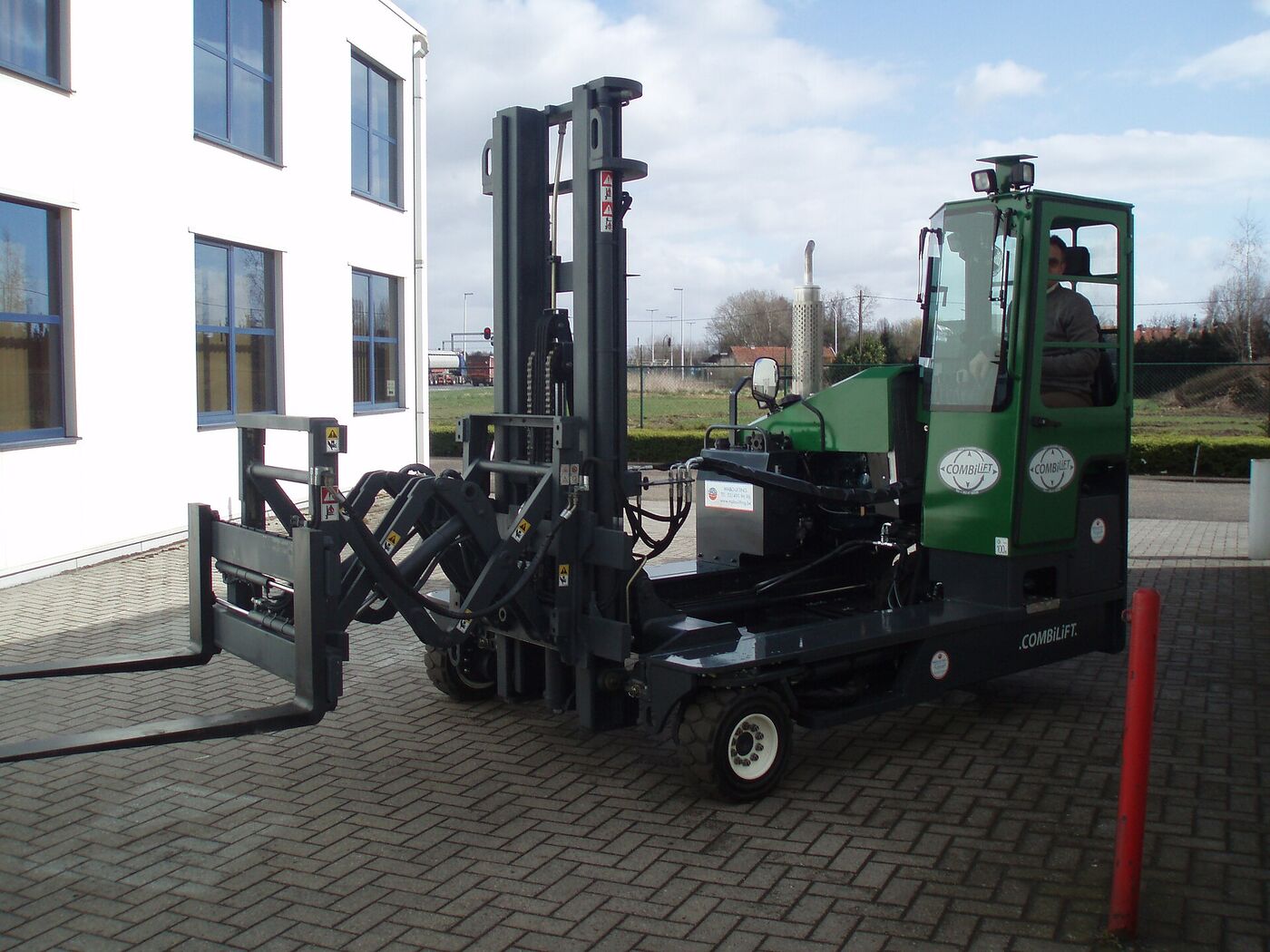

A sideshift, a clamp, a rotator or a set of fork extensions each turn one truck into a different truck, with a different capacity and a different set of hazards. The truck's capacity plate applies to the truck as it left the factory. Bolt something onto the carriage and that plate is no longer correct.
Why capacity falls
- The attachment has weight. A paper roll clamp can weigh 700 kg. That comes straight off the rated capacity.
- The attachment moves the load forward. Its thickness pushes the load centre further from the front axle. A 200 mm thick clamp on a truck rated at 500 mm load centre puts a standard pallet at 700 mm.
- Some attachments move the load sideways. A sideshift at full travel puts the load off-centre and reduces lateral stability.
- Fork extensions let the operator pick up longer loads, which have a longer load centre, so the capacity at the fork tips can be less than half the plate figure.
What must be in place
- A capacity plate for the truck with the attachment fitted, either a second plate or a combined one. The truck supplier or attachment manufacturer provides the figures.
- Specific job training for operators on that attachment. It is part of the truck for L117 purposes.
- Inclusion in the pre-use check: mounting, hoses, locking pins and hydraulic function.
- Inclusion in the LOLER thorough examination.
Our articles on sideshifts and paper roll clamps, box clamps and rotators and push-pulls and carpet booms describe the main types. For the arithmetic, see calculating capacity with an extended load centre.