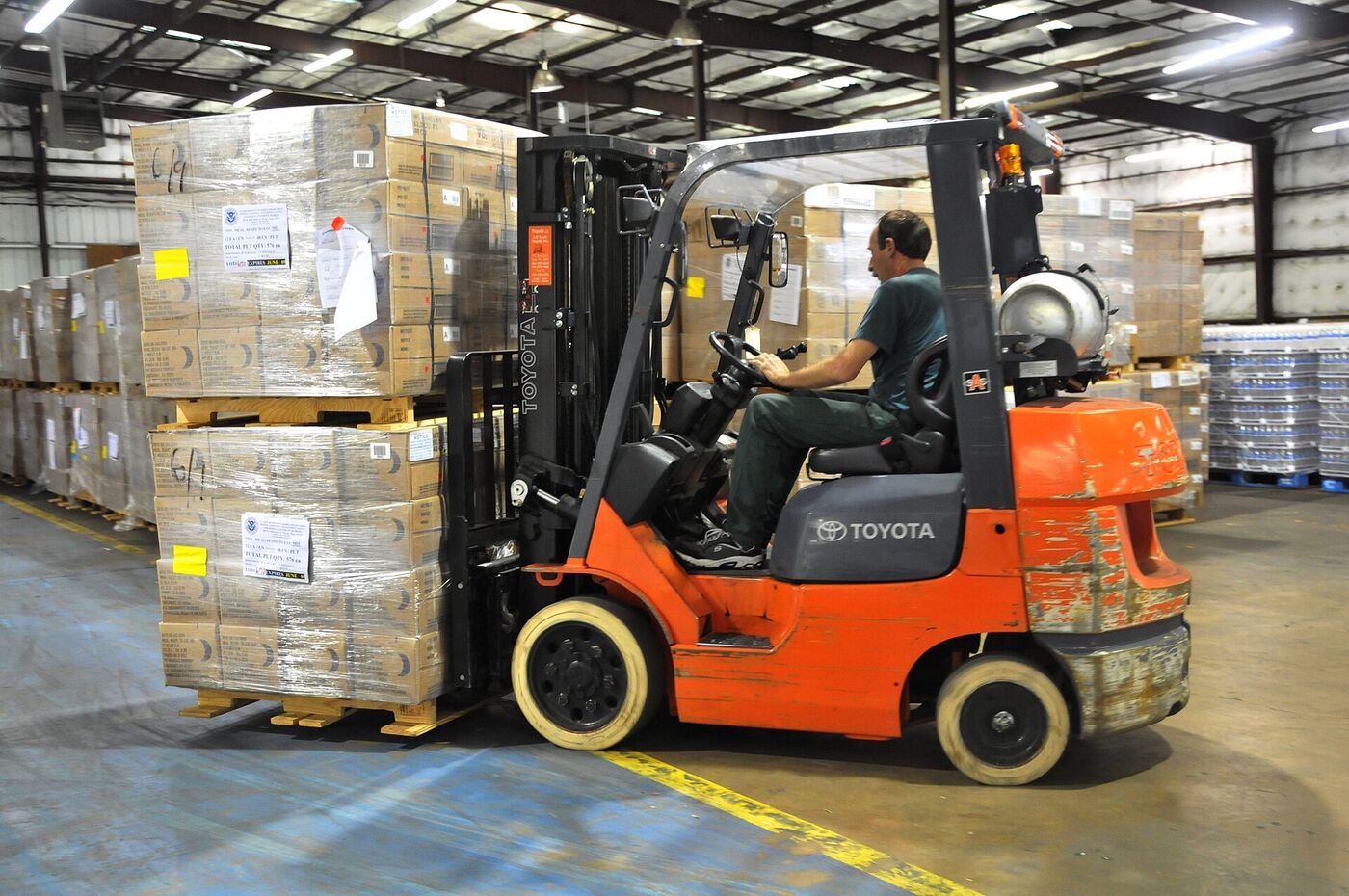
Overturns, pedestrians struck, falls from forks, falling loads and crushing against fixed objects. The same handful of causes appear in almost every investigation, and every one has a known fix.
The numbers
Workplace transport, which includes lift trucks, is consistently one of the top causes of fatal injury at work in Great Britain, with being struck by a moving vehicle accounting for around a fifth to a quarter of worker deaths in a typical year. The commonly quoted figure for forklift injuries is around 1,300 people a year seriously hurt in the UK, which is roughly five every working day. Most involve someone other than the operator.
The five ways forklifts hurt people
1. Overturns
The leading cause of operator deaths. A raised load, a turn taken too fast, a slope taken sideways, a kerb, a pothole, or a load heavier than the operator thought. In most fatal overturns the operator tried to jump clear and was crushed by the overhead guard. Prevention: travel with the load low, slow down before turning, wear the seat belt, and stay in the seat if the truck goes over. Read the stability guide.
2. Pedestrians struck
The leading cause of deaths overall. A colleague crossing an aisle, a delivery driver beside a trailer, a visitor who took the wrong door. Reversing trucks and blind corners feature heavily. Prevention: separate people and trucks physically, control speed, and enforce the rule that nobody approaches a truck until the operator has stopped and acknowledged them. Read the pedestrian safety guide.
3. People lifted on the forks
Someone stands on a pallet or in a bucket to reach a high shelf, fix a light or clear a blockage. They fall, or the pallet slips, or their hand is caught in the mast. It is still common because it is quick and it usually works. Prevention: a total ban, enforced, and a proper work platform available so there is no excuse. See the £120,000 fine that followed one such case.
4. Falling loads
Unstable pallets, damaged stretch wrap, loads placed on one beam, forks not fully inserted, travelling with the mast tilted forward. The load falls onto a pedestrian, onto the operator through the overhead guard, or onto the person releasing the straps on a flatbed. Prevention: reject unstable loads, use a load backrest, keep the mast tilted back, and keep people out from under raised loads.
5. Crushing and trapping
A person caught between the truck and racking, a wall or a vehicle. Mechanics caught in the mast or under a raised truck. A driver crushed between a reversing truck and their own trailer. Prevention: exclusion zones, banksmen where visibility is poor, isolation and propping before maintenance, and the loading bay controls described in the loading guide.
The causes behind the causes
Investigations rarely find a single cause. They find a chain, and the same links keep appearing:
- Inadequate training. Operators who were shown the controls by a colleague. Supervisors who had never been trained at all.
- No supervision. Rules that existed on paper and were never enforced, so short cuts became normal.
- Poor layout. Aisles too narrow, routes that force pedestrians through truck areas, loading bays with nowhere safe to stand.
- Maintenance failures. Worn forks, faulty brakes, missing capacity plates, reversing alarms disconnected because they were annoying.
- Production pressure. The deadline that made the operator carry two pallets, skip the pre-use check, or take the short route across the slope.
Learning from near misses
For every injury there are many near misses that could have been the same incident. Sites that report and investigate near misses find their weak points before someone is hurt. That needs a reporting system that is quick to use, a manager who responds to every report, and a culture where reporting is seen as professional rather than as grassing. The incident reports in our safety news section are a useful source for toolbox talks: every one of them was somebody else's near miss first.
Key points
- Overturns kill operators. Being struck kills pedestrians. Together they account for most forklift deaths.
- Lifting people on forks, falling loads and crushing make up the rest, and all are preventable.
- Behind every incident is a chain: training, supervision, layout, maintenance and pressure.
- Report and investigate near misses. They are free lessons.
Sources and further reading
- HSE, Work-related fatal injuries in Great Britain, annual statistics
- HSE, Workplace transport safety (HSG136)
- HSE L117