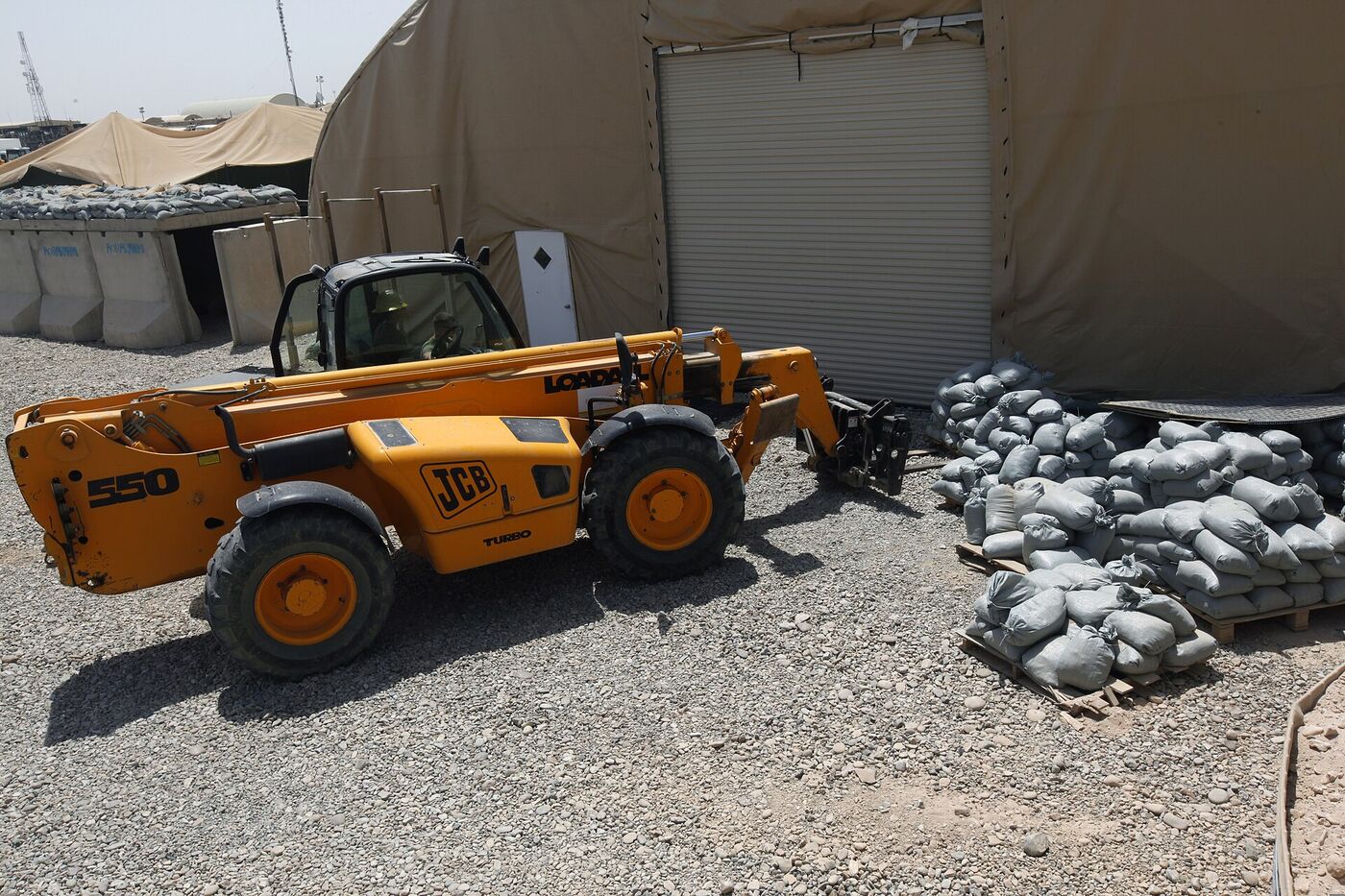
A forklift spends far more of its time reversing than a car does. Every pallet placed means a reverse away from the rack, every load that blocks the view means driving backwards, and in a narrow aisle there is often no room to turn. Reversing is also when most pedestrians are struck.
Before you reverse
- Stop. Look over both shoulders and check the mirrors. Look for people, obstacles, kerbs and dock edges.
- Sound the horn.
- If the view is restricted by a wall, a vehicle or a load, get a banksman or get out and look.
While reversing
- Turn your body in the seat so you are looking in the direction of travel. Hold the wheel with one hand and use the other on the seat back or grab handle for support. Do not steer by mirror.
- Keep looking behind for the whole manoeuvre. The pedestrian who was not there when you started can be there two seconds later.
- Slow. Reversing speed should be walking pace or less.
- Keep the load low and the mast tilted back, exactly as when driving forward.
- Remember the counterweight swings out when the truck turns. On a counterbalance truck with rear-wheel steer, the back end moves sideways by a surprising amount, and it is the heaviest part of the truck.
Reversing alarms and cameras
Reversing alarms warn people nearby but they are so common that they are often ignored, and operators sometimes disconnect them because of complaints about noise. Broadband "white noise" alarms are less intrusive and easier to locate. Rear cameras help, particularly on larger trucks, but like mirrors they show a limited, distorted view and must not replace looking. None of these devices is a substitute for keeping pedestrians out of the area.
For the site-level measures that make reversing safer, see the pedestrian safety guide and the loading bay guide.